



More photos
Information about Sillebotten
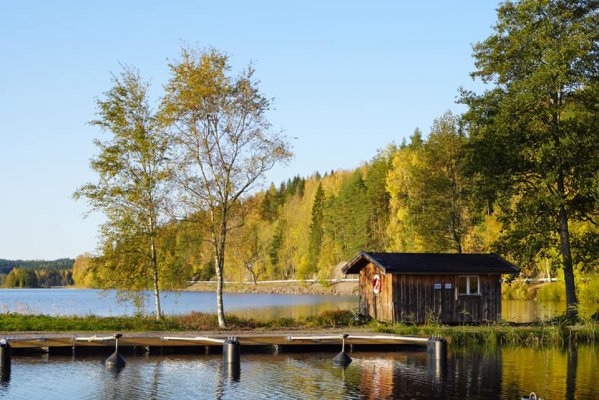
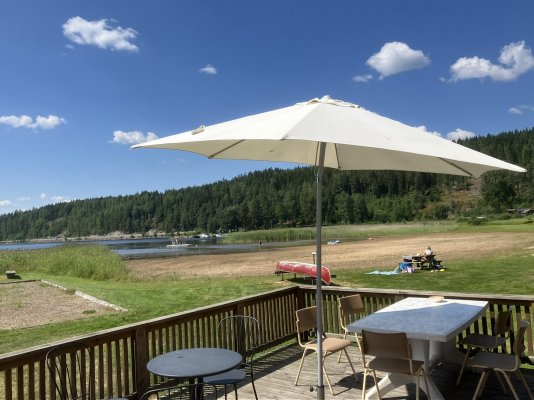
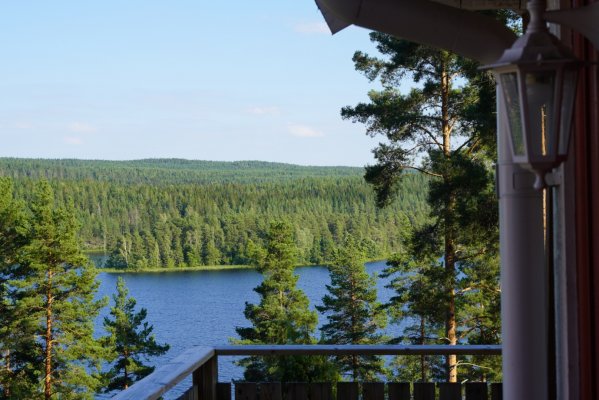
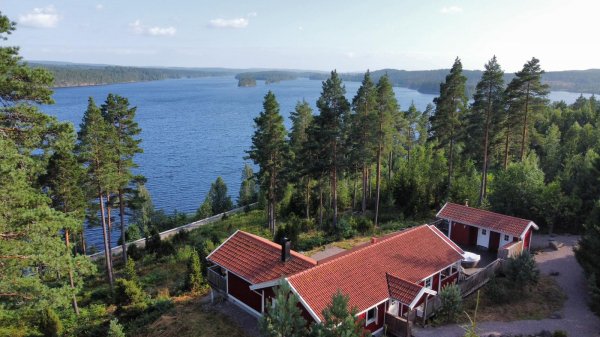
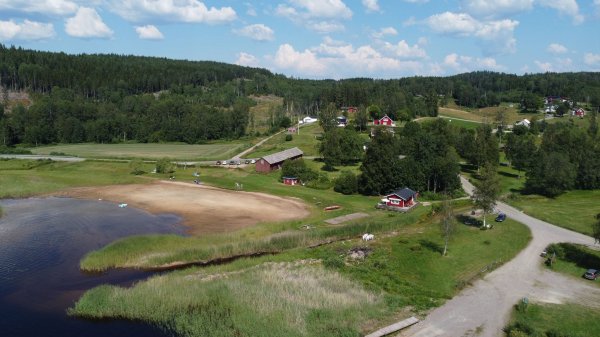
The village of Sillebotten in Värmland is located on the northern part of Lake Östra Silen, one of the large lakes on the Dalsland Canal. It is 22 km from Årjäng and about 8 minutes from the E-18 motorway and has its own sandy beach, small harbor, and boat ramp.
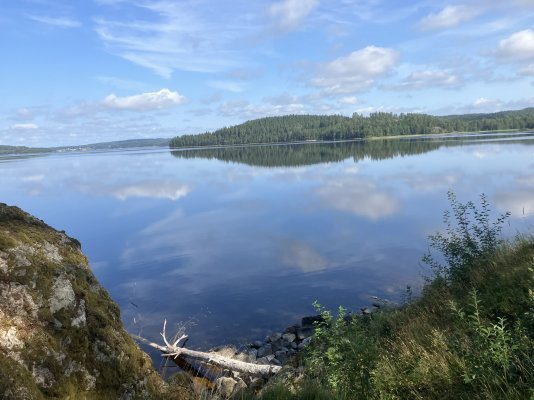
Lake Östra Silen near Sillebotten lies between the two provinces of Värmland and Dalsland and is considered by many to be the most beautiful lake in the Dalsland Canal lake system. It boasts numerous exciting bays, islands, and passages to other natural areas.
Rent a holiday home in Sillebotten >>
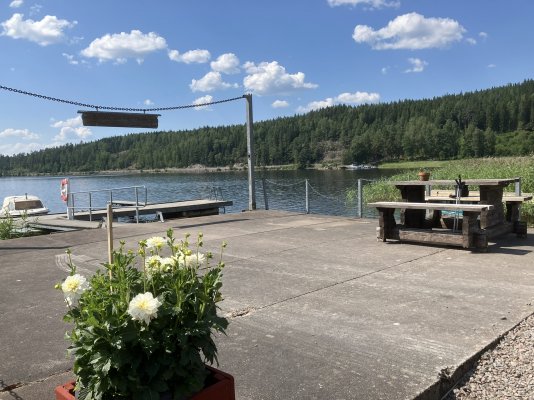
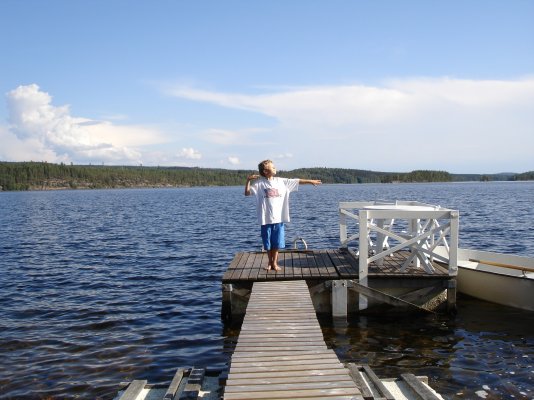
You can sail onto Lake Östra Silen from Sillebotten or from the Dalsland Canal lake system. You can launch a boat in Sillebotten or at the guest harbor and boat ramp. In Lake Östra Silen, you can fish for trout, salmon, whitefish, pike, perch, and various whitefish species. The lake boasts a diverse archipelago with many islands, crystal-clear water, and a distinct wilderness atmosphere. A fishing permit is required for the entire lake, and in Sillebotten, in addition to the trailer ramp, there's also a jetty for mooring. During the summer months, there's a kiosk at the beach. While enjoying an ice cream or a soft drink on the terrace, you can enjoy beautiful views of the beach and Lake Östra Silen.
The Sillebotten Nature and Culture Trail begins and ends at Sillebotten's Gästbrygga and comprises a total of 6.5 km of hiking trail between Sillebotten and the old Fjällane farm. You can combine the trail with several other trails and forest roads in the beautiful surroundings near Lake Östra Silen.
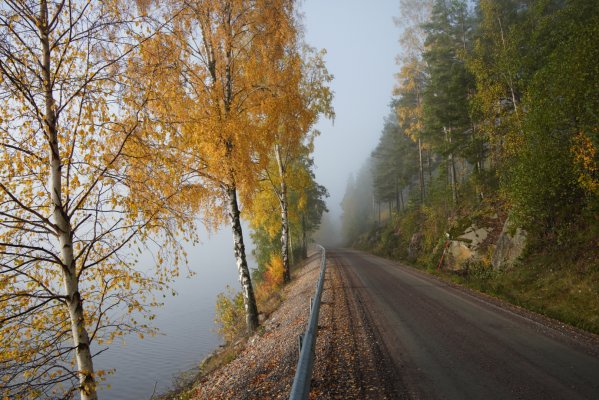
The area around Sillebotten boasts both beautiful and diverse nature. Forests, lakes, hills, rocks, and viewpoints offer visitors a nature experience that's definitely worth a visit. But it's not just about the beautiful scenery. The trail also passes places that offer insight into the area's history, a history that stretches from ancient times and pilgrimages to the present day.
The history of Sillebotten and its surroundings:
Sillebotten is first mentioned in public records in 1554, but dates back to the 13th century. Traces of the early Middle Ages have also been found in the area. Sillerud was a pilgrimage route, reflected in several place names. The parish priest of Svanskog, C.A. Högmer, described this period in western Värmland in his books. He describes how the main pilgrimage route to Trondheim and Nidaros ran from Ämmeskog via Fjällane and Tranhem, and on via Sillerud and Korsbyn to Norway. They then passed through Sillebotten.
There are also natural names in the area that tell a story about old church roads. Between Sillebotten and Fjällane, you'll pass "Brurekleva" and "Offerrösera," and between Fjällane and Ämmeskog, you'll find "Kyrkemossen." These are all typical spots along old roads where people walked to church. Roads and churches that have long since disappeared, but whose names still exist.
Traces of an even earlier history can also be found in Sillebotten. The area around Östra Silen is rich in ancient remains. Several Stone Age tools have been found at Ostekasen, and two Stone Age chests are known at Korpeberg. One of these, excavated in the 1950s, contained the most valuable finds ever made in a rock chest in Värmland.
With the pilgrimages came the plague. This part of present-day Dalsland and Värmland was hit particularly hard, and large segments of the population died from the disease. Two place names, Rök and Ödebyn in Svanskog, recall this period. But it wasn't just the plague that ravaged the people here. Years of crop failures and famine also played a role, as did the wars between the Swedish and Danish kings. The Danish king encouraged the Norwegians, then part of Denmark, to attack western Sweden in order to trap a portion of the Swedish forces at the Norwegian border. The Norwegians used the lakes for their attacks. In winter, they came across the ice, set fire to villages, and carried off valuables. In 1645, it was Sillebotten's turn to be attacked and burned to the ground. Help from the Swedish king and his army was rare, and their only defense was to set up shelters, raise the alarm, and then flee into the forest with everything of value. The Vårdkasberget mountain on Egenäs takes its name from this period.
Better times:
Fortunately, better times came. In the 18th century, the population grew significantly thanks to immigration from Finland and also from the Roma. The latter quickly changed their names to Swedish to avoid persecution. The Finns cut down and burned forests to create new farmland, often in highland areas. Several place names from this period are still preserved. Finnbråtsberget and Finnebråten are good examples.
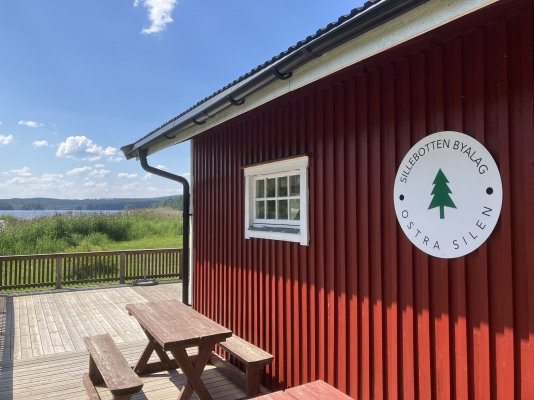
In the 19th century, steamboat traffic also reached the Östra Silen. The Göteborgsposten of June 14, 1870, described how to travel between Sillebotten and Gothenburg on the steamship Werner Eriksson. This was one of the first steamboat lines operating on the lakes until the 1930s. Steamships brought about major changes in the countryside, as goods could now be transported in a completely different way than before. Steamboats also offered a new way to travel the world, including for emigrants to the vast western lands. Many emigrant journeys likely began in Sillebotten on the Östra Silen lake. The steamboat pier used to be located where the guest pier is now. The harbor office was located where the village association's clubhouse is now.
Railway:
Industrialization began in the 19th century, and the growing paper and pulp industry along the lakes needed raw materials. This was the reason for the first railway line in Western Värmland. A railway line, the "Wilderness Express," ran from Grinsbyn to Sillebotten. The railway transported timber from Stora Bör to the Östra Silen lake for onward transport to the paper mills. The old railway line has been preserved and is used for parts of the hiking trail near Sillebotten. In the 20th century, steamboat traffic on the lakes faced competition from a new railway line between Åmål and Årjäng. In the 1930s, the steamboats were finally forced to cease operations.
Steamboat transport:
With the steamships Idun and Werner Ericson (1870), it was possible to travel by steamship from Sillebotten to Gothenburg. This was likely the beginning of many emigration journeys. In Gothenburg, Atlantic steamships awaited crossings to the United States.
Before the railways reached Nordmark, shipping on the lakes in the Dalsland Canal was an important means of transport. Sillebotten served as a central transport hub because the village served as a terminus. The boats departed where the guest pier now stands. The steamship Idun was then used for navigation on the Ostra Silen lake. The site where the red building of the Village Association now stands was once the site of the canal company in Sillebotten. Boat traffic continued until the late 1920s, when trains and cars replaced steamboats and harbor activities in Sillebotten ceased.
bron: Sillebottens byalag /Arkivet Karlstad
Rent a Holidayhouse in SillebottenWelcome to Silltal, Sweden
Silltal Holiday Home, Sweden
Talo and Jeanet
Mobile: +31 (0)6 490 384 82
Email: info@silltal.com